
Pool Vice Guide
Weekly Pool Maintenance Checklist
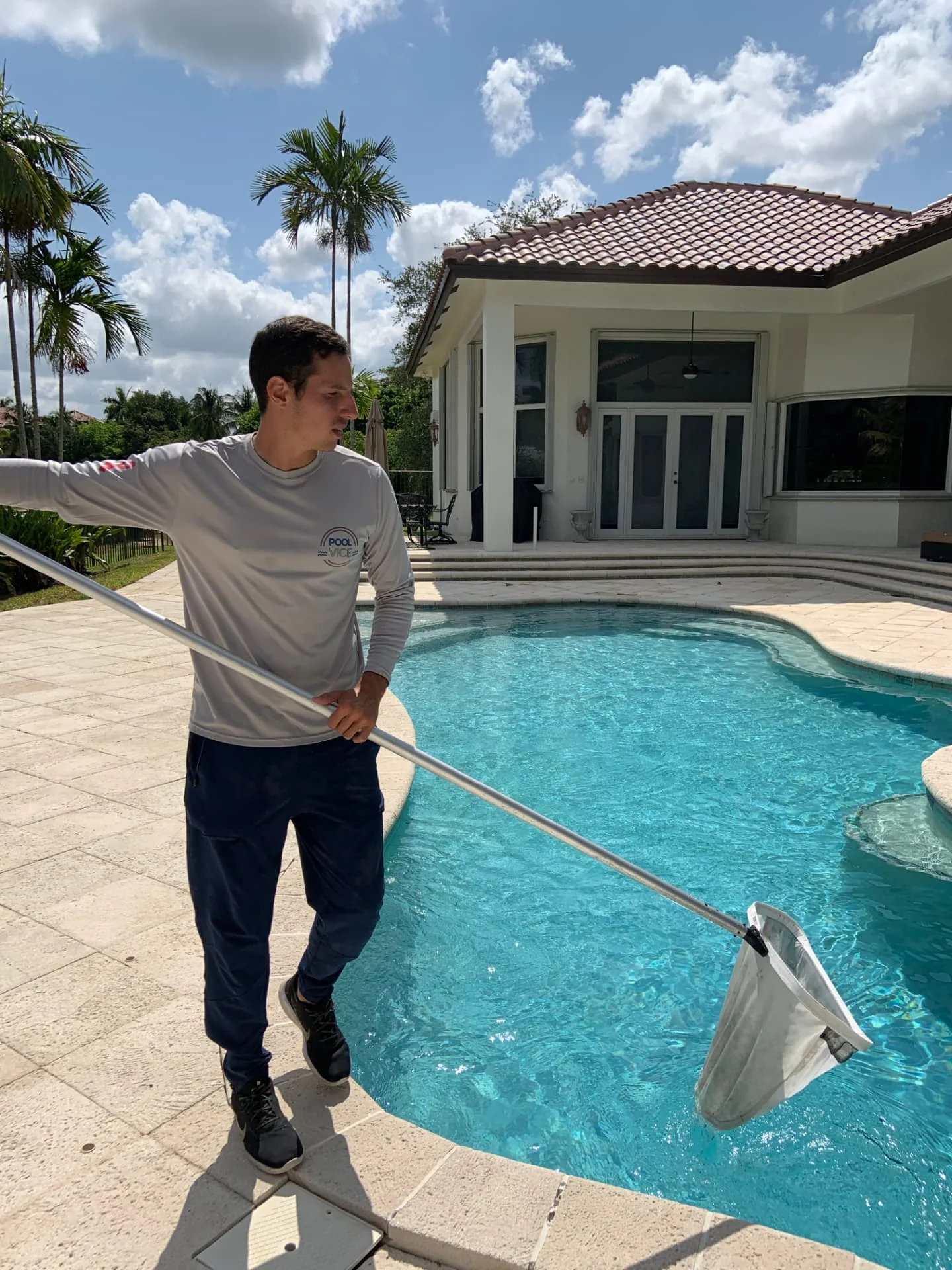
A complete weekly pool maintenance visit should include skimming the surface, brushing walls, steps, and the waterline, vacuuming the floor, emptying skimmer and pump baskets, checking the water level, testing and balancing chlorine, pH, alkalinity, and stabilizer, and inspecting the pump, filter, and visible equipment. In South Florida's heat and rain, doing all of these every week is what keeps the water clear and equipment problems small.
Why weekly matters in South Florida
Warm water, strong sun, frequent rain, and year-round swimming mean chemistry and cleanliness change quickly here. Skipping a week or two is often how a clear pool turns cloudy or green. A fixed weekly routine catches small changes before they become expensive problems.
The weekly cleaning checklist
Cleaning protects circulation and removes the organic material that consumes sanitizer:
- Skim the surface to remove leaves, insects, and floating debris.
- Brush the walls, steps, benches, and waterline, where algae and film start first.
- Vacuum the floor to remove dirt and settled debris that can stain the finish.
- Empty the skimmer basket(s) so water can flow freely to the pump.
- Empty the pump basket to protect the pump and keep flow strong.
- Check the water level. It should sit around the middle of the skimmer opening so the skimmer works properly; adjust after heavy rain or evaporation.
The weekly water chemistry checklist
Balanced water keeps swimmers comfortable and protects surfaces and equipment. Test and correct:
- Free chlorine: the active sanitizer that keeps algae and bacteria in check.
- pH: affects how well chlorine works and how comfortable the water feels.
- Total alkalinity: helps hold pH steady.
- Stabilizer (cyanuric acid): protects chlorine from sunlight, which matters a lot under Florida sun.
- Calcium hardness (periodically): helps protect plaster and equipment from being etched or scaled.
The weekly equipment checklist
A quick look at the equipment each week is the cheapest repair you will ever make:
- Listen to the pump for new grinding, humming, or screeching sounds.
- Watch the returns for air bubbles or weak flow.
- Check the filter pressure gauge and note changes from normal.
- Look for drips or leaks around the pump, filter, and valves.
- Confirm timers, heaters, and salt systems are running as expected.
Extra steps after storms and heavy use
After a heavy storm, remove debris as soon as it is safe, check the water level, and retest the chemistry—rain dilutes chlorine. After a party or a weekend of guests, retest sooner than usual, since swimmers use up sanitizer. During hurricane season (June 1 to November 30), keep loose items off the deck and make sure baskets are clear before a storm arrives.
Monthly and seasonal tasks to add
Some jobs do not need to happen every week but are easy to forget. Clean or backwash the filter when its pressure rises noticeably above the clean baseline. Check calcium hardness from time to time, since water that is too soft or too hard can damage plaster and equipment. Inspect the salt cell on salt pools for white scale. Look over lights, timers, and automation schedules, especially after a power outage, which can reset timers.
Seasonally, review how many hours the pump runs. Hot, rainy summers usually demand more circulation and closer attention to sanitizer than the cooler, drier months. Before hurricane season, make sure you know how to turn equipment off safely and keep a plan for clearing the pool after a storm.
Keeping a simple pool log
Writing down a few numbers each week makes problems easier to spot. Record the date, free chlorine, pH, alkalinity, stabilizer, filter pressure, and anything unusual you noticed, such as a new pump noise or a drop in water level. Over a few weeks, you will learn what normal looks like for your pool, and changes will stand out right away.
A log is also helpful if you ever need a repair: being able to say when the pressure started climbing or when the noise began helps a technician narrow down the cause faster.
- Date and weather (rain, heat, storms).
- Chemistry readings and what you added.
- Filter pressure.
- Water level and anything unusual you saw or heard.
Doing it yourself vs. weekly service
Plenty of owners handle part of the list themselves. The challenge is consistency: chemistry needs to be tested every week, not just when the water looks off. Weekly professional service covers the full checklist on a set day.
Pool Vice's weekly maintenance includes skimming, brushing, vacuuming, baskets, water level, chemistry, an equipment inspection, a written report of any issues, and a photo of your pool sent to you when each service is finished. We serve Miami-Dade and Broward County, seven days a week.
Weekly pool maintenance →Pool service areas →Pool service in Weston →Pool service in Miramar →Pool service in Fort Lauderdale →
Frequently asked questions
How often should I test my pool water?
At least once a week, and again after heavy rain or heavy use.
How long should my pool pump run each day?
Long enough to circulate the full volume of water. The right number of hours depends on the pump, pool size, and season, so it is worth reviewing with a professional.
Do screened pools need weekly cleaning?
Yes. Screens stop larger debris, but fine dirt, pollen, and rain still affect the water and surfaces.
What should the water level be?
Around the middle of the skimmer opening. Too low and the skimmer can pull air into the pump; too high and the skimmer cannot pull floating debris off the surface well.
Should I keep maintaining my pool in the cooler months?
Yes. South Florida pools stay warm enough for algae most of the year, so weekly cleaning and chemistry still matter, even when the pool is used less.
What does a weekly visit from Pool Vice include?
Skimming, brushing, vacuuming, baskets, water level, chemistry testing and balancing, an equipment inspection, a written report of issues, and a photo when the service is finished.
Need help with your pool?
Get a free, honest estimate anywhere in Miami-Dade or Broward County.
Request Free Estimate